Historian, translator, and scholar of comparative jurisprudence
Alsadiqin Institute
Biography
A scholar in context
Rabbi Ben Abrahamson is a historian, translator, and scholar of comparative jurisprudence. His work focuses on Muslim–Jewish historical relations, the legal recognition of religious communities, covenantal thought, and the transmission and interpretation of classical sources.
His books and translation projects include original historical studies as well as English reading editions of major Islamic works. His institutional responsibilities are described separately on the About page so that authorship and governance remain distinct.
Selected works
Books and projects
Book covers, short descriptions, and edition information are shown below. ISBNs are included where a published edition could be verified; projects without a verified ISBN are identified separately.
Browse the complete Amazon author catalogue ↗
01
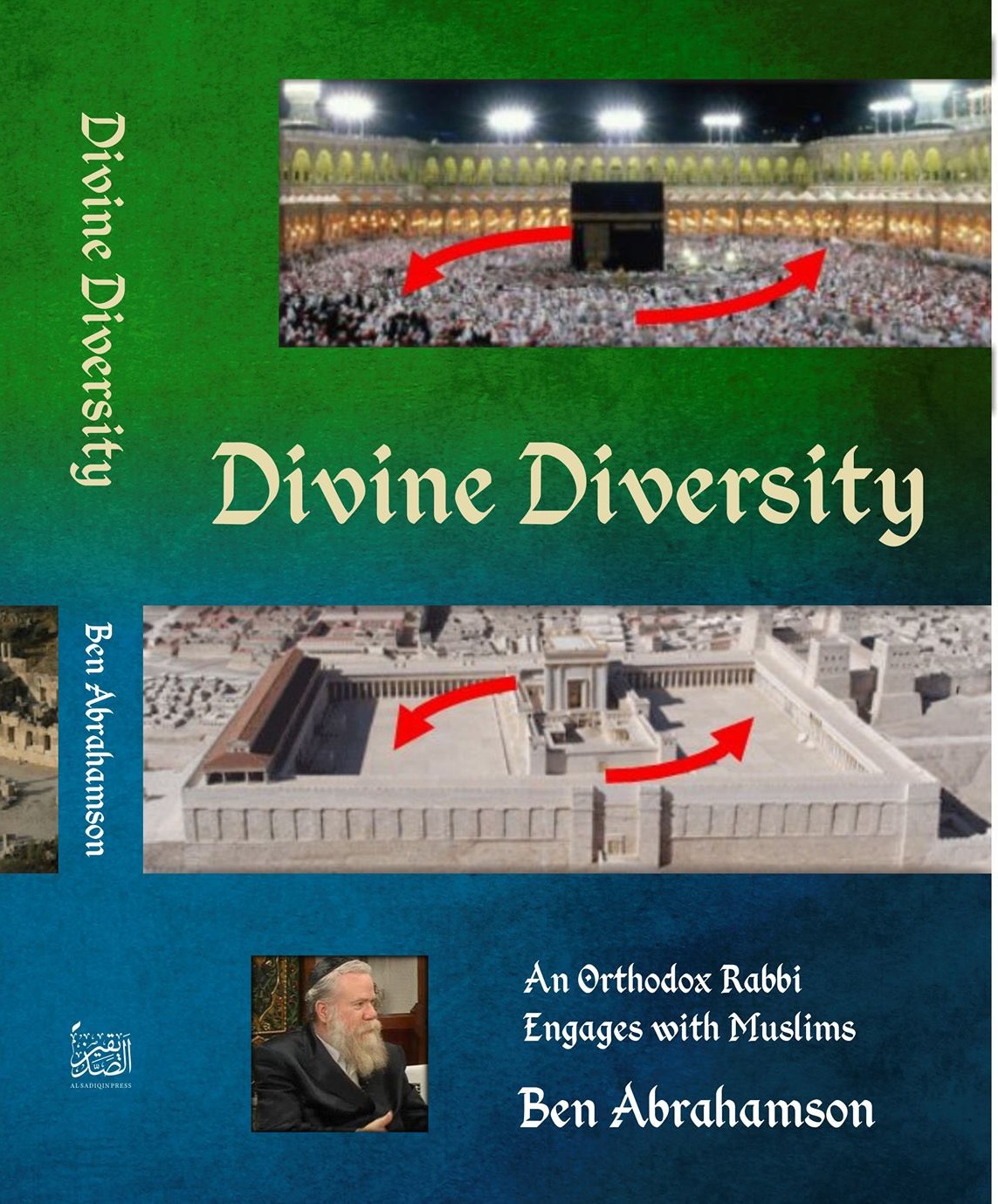
Divine Diversity
An Orthodox Rabbi Engages with Muslims
A collection of Muslim–Jewish dialogues on the roots of religion, the Middle East, and interfaith relations, presenting a traditional rabbinic framework for recognizing faithful Muslims while exploring shared Abrahamic principles.
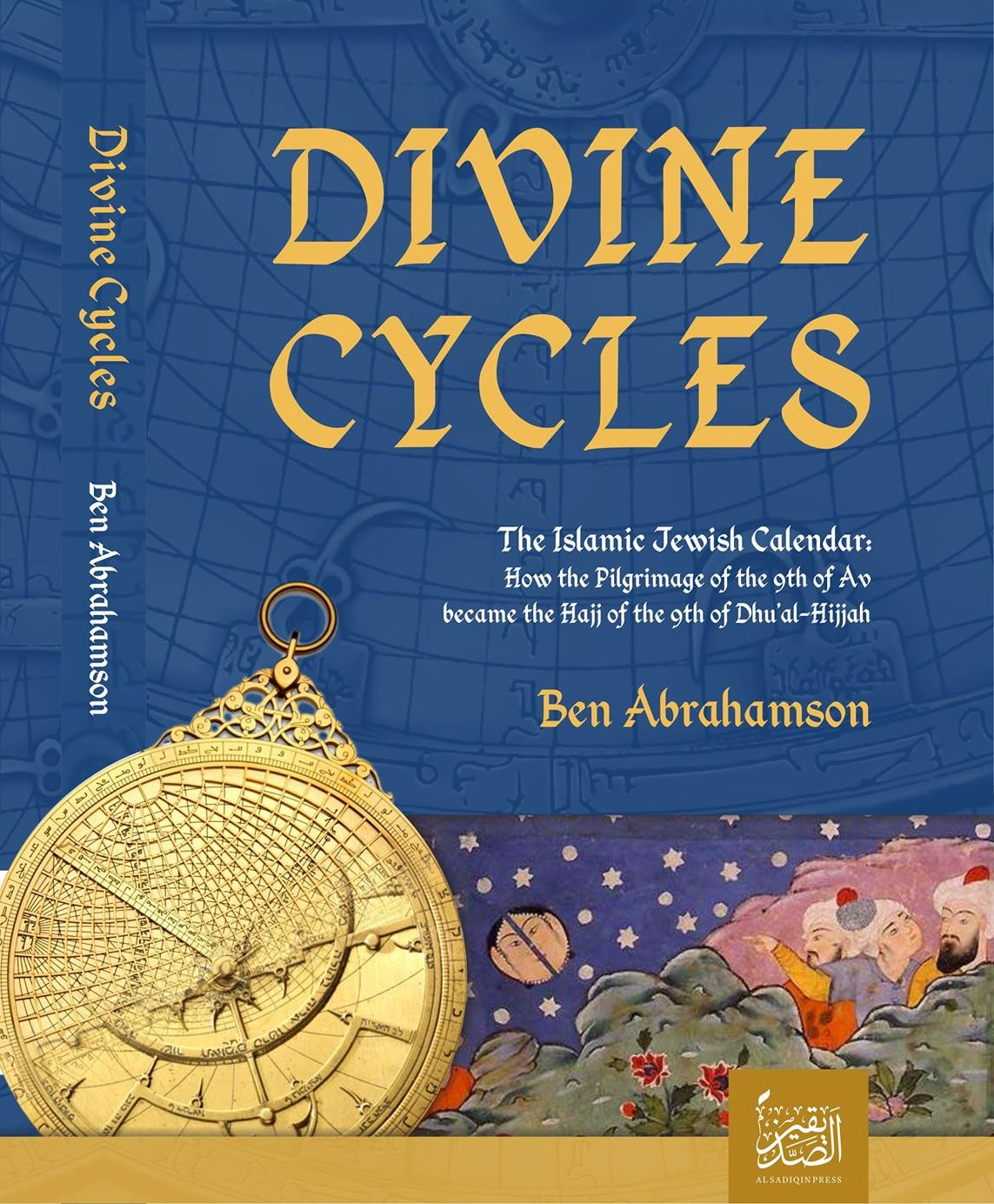
Traces historical relationships between Jewish and Islamic calendars, including sacred months, intercalation, ʿĀshūrāʾ and Yom Kippur, and the proposed development of the Hajj date from the 9th of Av to the 9th of Dhu al-Hijjah.
Investigates a proposed connection between Quraysh and the Zadokite/Oniad priestly tradition, following Levite and priestly histories from Jerusalem and Egypt into Arabia and asking whether Onias IV belongs in the historical background surrounding Mecca.
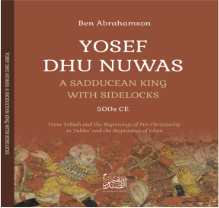
Traces the Tobiad dynasty from biblical and Persian roots through ʿIraq al-Amir and Arabian history to the Tubbaʿ kings of Himyar, culminating in Dhu Nuwas and the religious-political setting on the eve of Islam.
The Persian Compared with the Islamic Conquest of Jerusalem
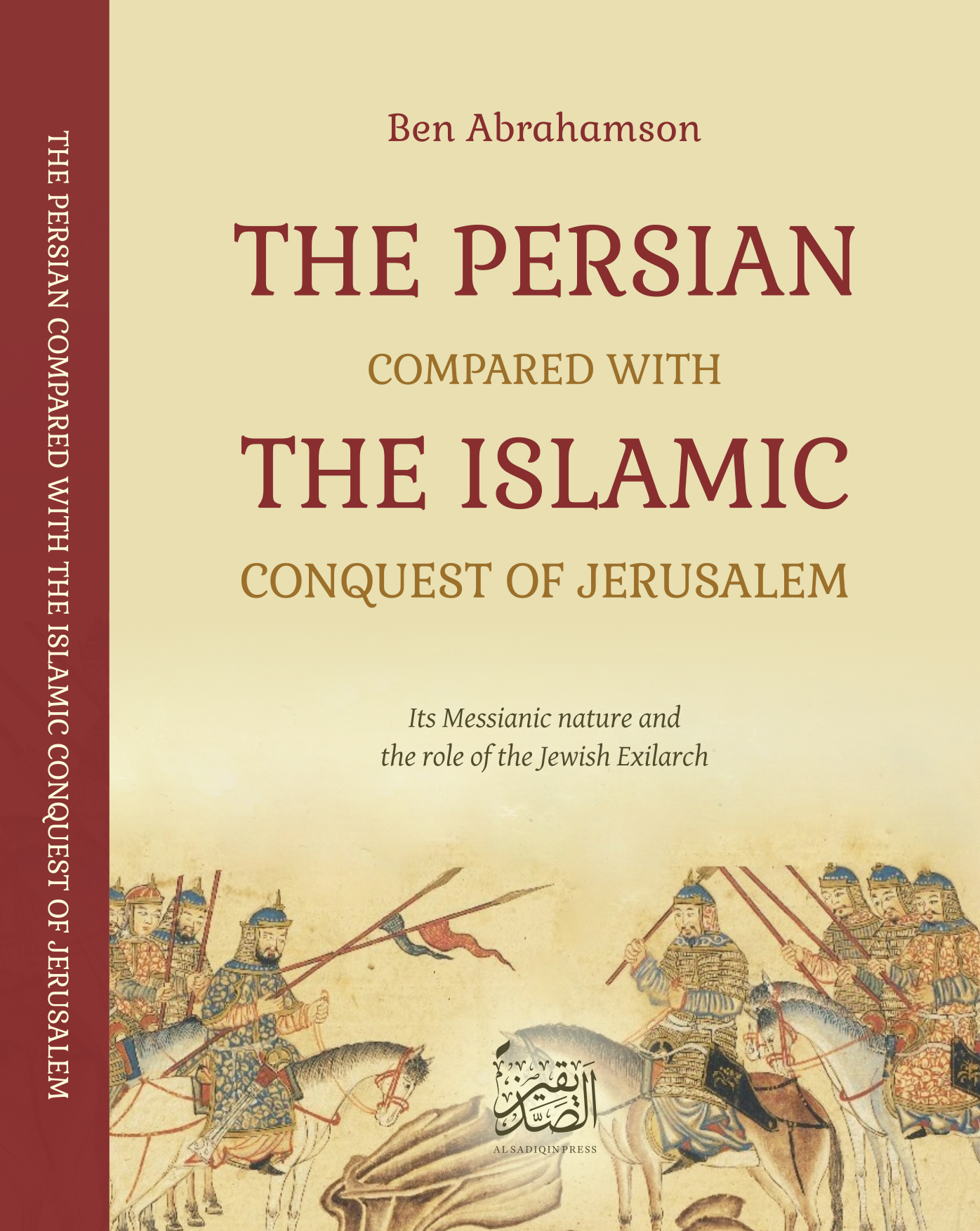
Its Messianic nature and the role of the Jewish Exilarch
Compares the Persian capture of Jerusalem in 614 CE with the early Islamic conquest in 638 CE, focusing on Jewish alliances, messianic expectations, the Exilarchate, and Jewish participation in the political history of Jerusalem.
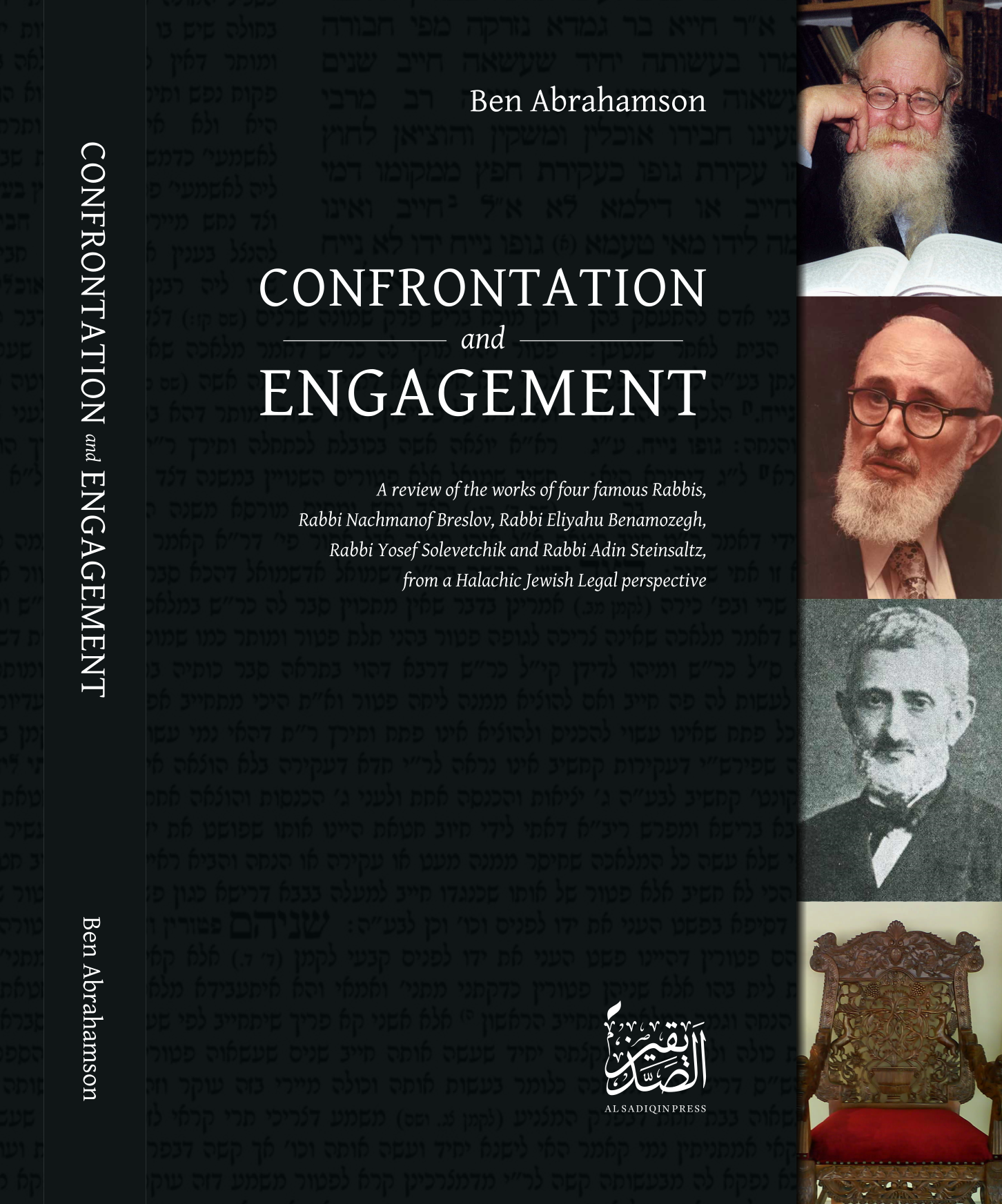
Explores multi-covenantism in Orthodox Jewish thought through halakhic, philosophical, and mystical sources, using the Noahide covenant and religious federalism to ask how distinct faith communities can coexist without erasing religious integrity.
People of the Table is a strikingly original and intellectually ambitious work that reopens a conversation long ignored in Western scholarship: the possibility that the Qur’an preserves memories of a halakhic, Temple-centered Jesus movement older than the traditions that later solidified into Rabbinic Judaism and Gentile Christianity. It proposes a unified explanatory model for the most puzzling Qur’anic statements about Jesus and his followers.
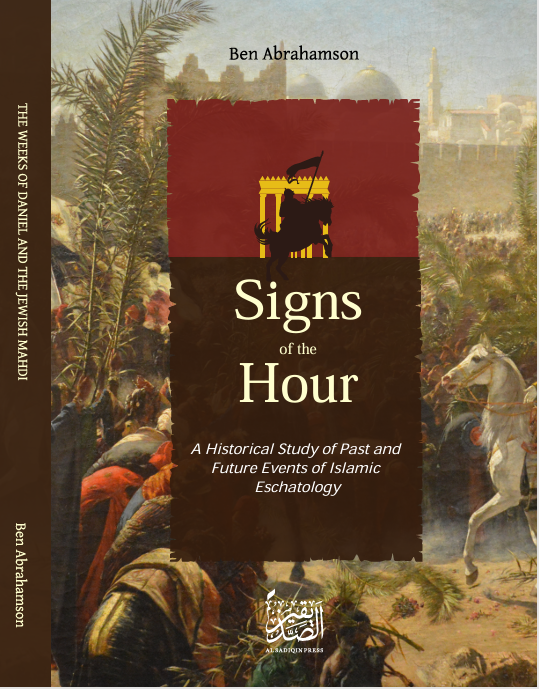
A Historical Study of Past and Future Events of Islamic Eschatology
Examines Rabbinic and Islamic eschatological traditions—including the Messiah, Mahdi, Armilus, and Dajjal—and considers how social breakdown, propaganda, technology, and modern media shape religious expectations concerning the end times.
Research project
09
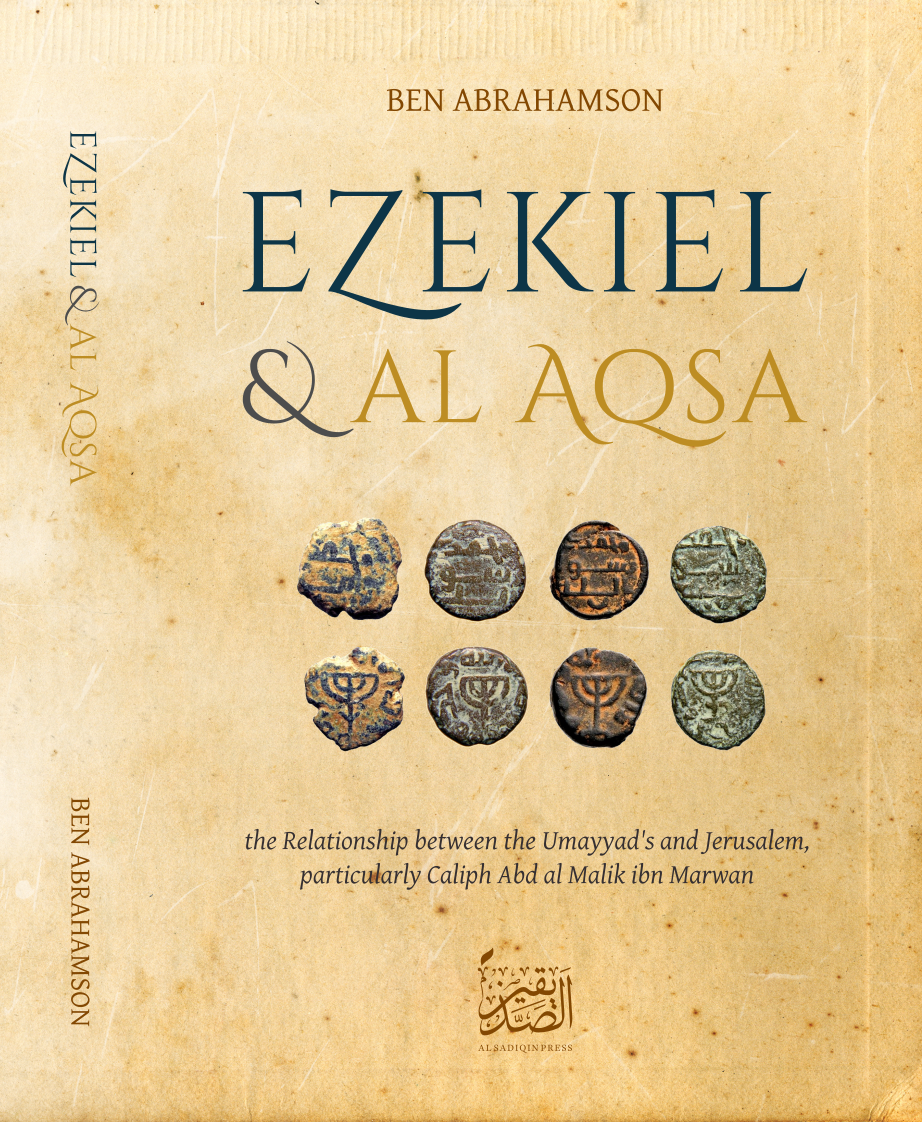
Ezekiel & Al Aqsa
Scripture, place, and historical memory
A historical study of the Umayyads and Jerusalem, particularly Caliph ʿAbd al-Malik ibn Marwān, using Ezekiel and al-Aqsa as a framework for scripture, sacred geography, and early Islamic historical memory.
Research project
10
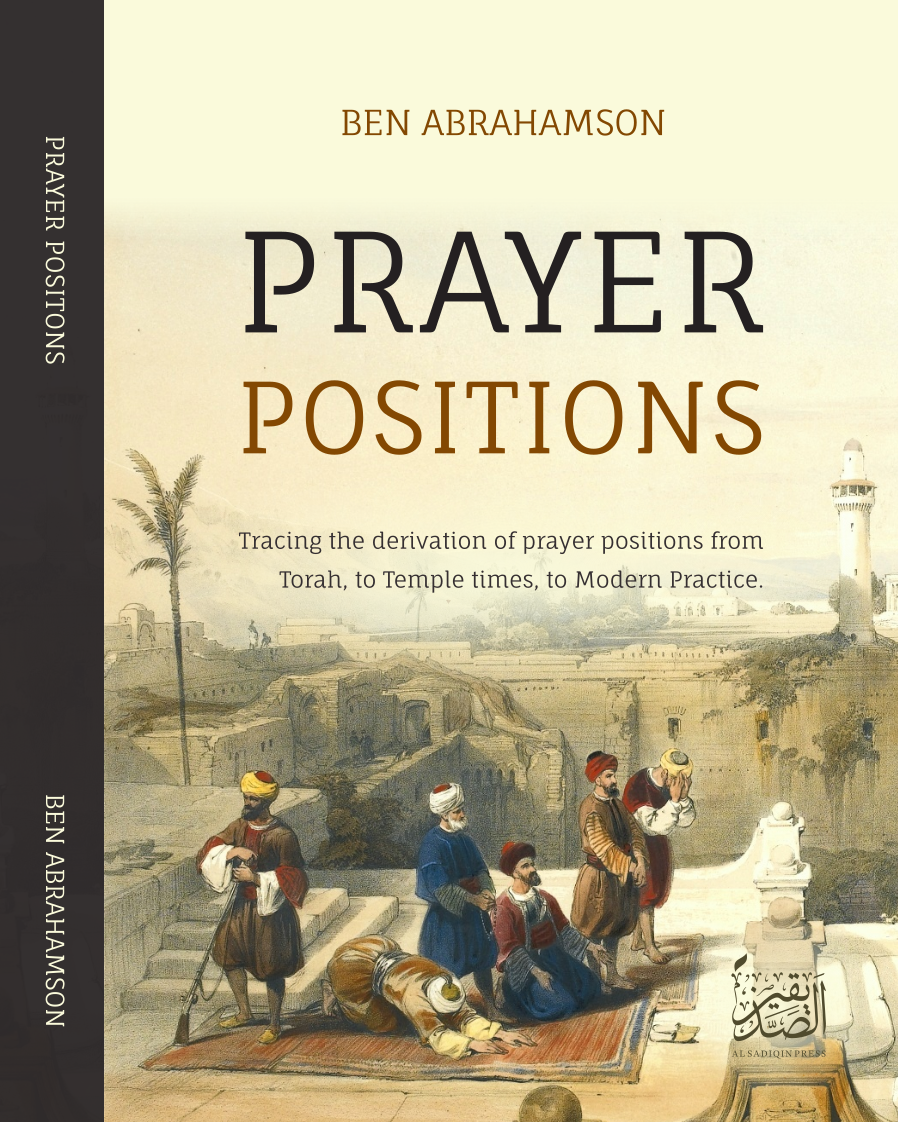
Prayer Positions
Tracing prayer from Torah and Temple practice to modern worship
Compares bowing and prostration in mosque and synagogue, tracing ritual forms from Torah and Temple practice to later Jewish and Islamic prayer and identifying points for further historical comparison.
Research paper · 2010
11
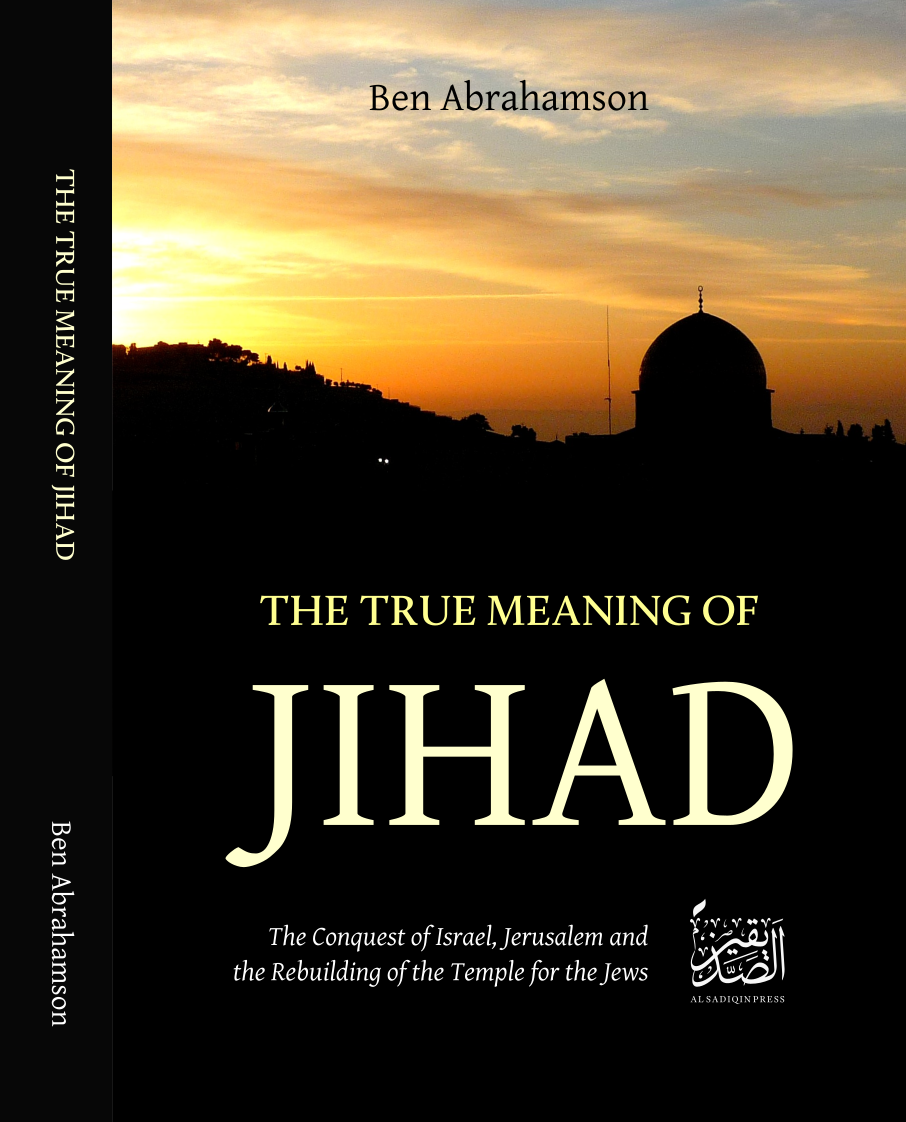
The True Meaning of Jihad
A source-based study
A source-based study of jihad in relation to the conquest of Jerusalem, Jewish restoration, and the rebuilding of the Temple, framed through early Islamic and Jewish historical material.
Research project
12
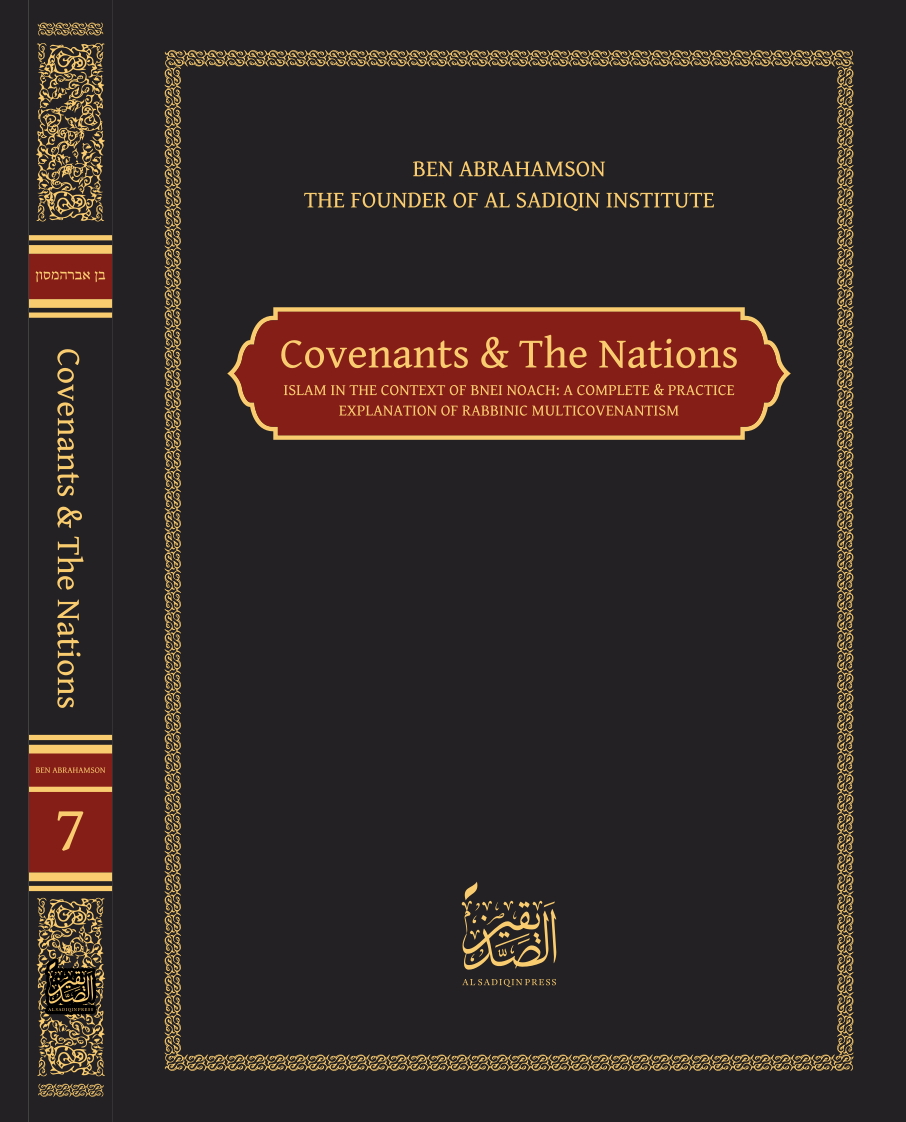
Covenants & The Nations
Law, covenant, and communities
Examines Islam in relation to Bnei Noach (Noahide) categories and presents a practical account of rabbinic multi-covenantism and religious federalism.
Research project
13
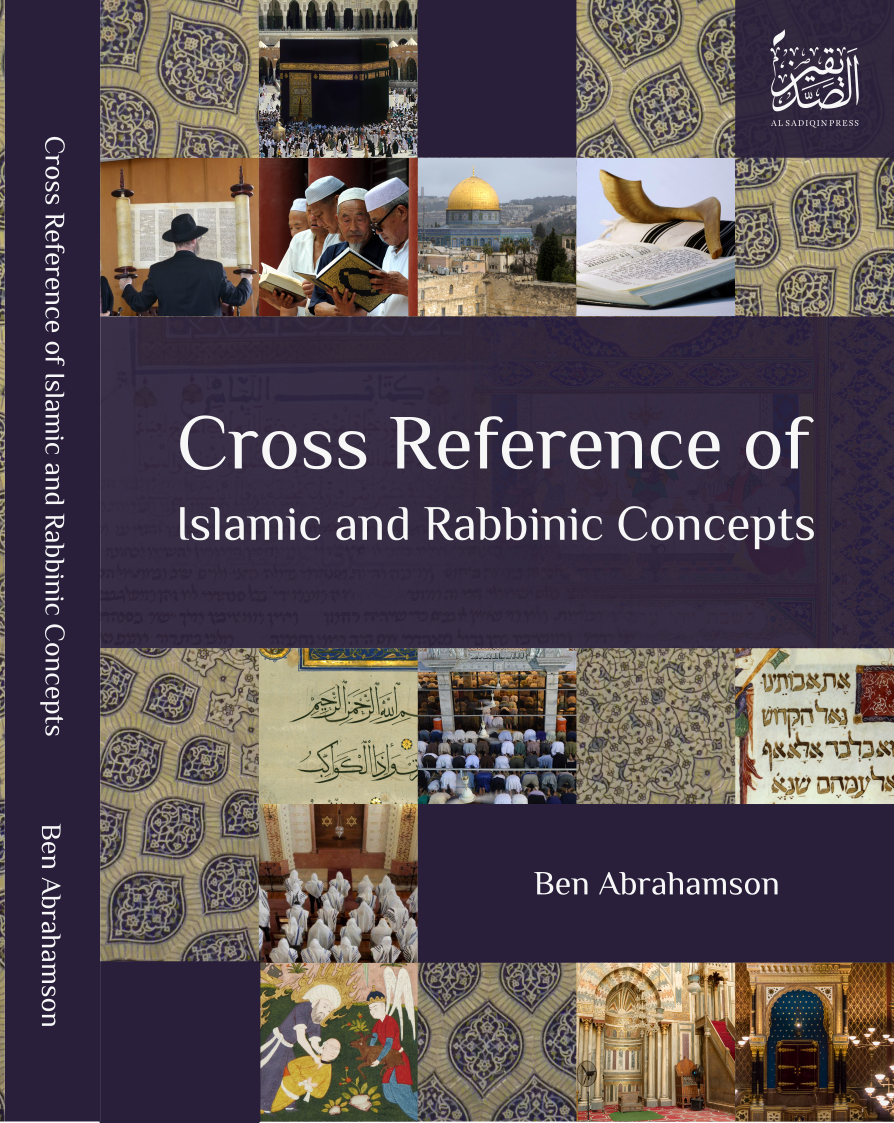
Cross Reference of Islamic and Rabbinic Concepts
Reference guide
A reference guide aligning Islamic and Rabbinic concepts, institutions, and legal-religious vocabulary to make comparative study across the two traditions easier to navigate.
Reference project
14
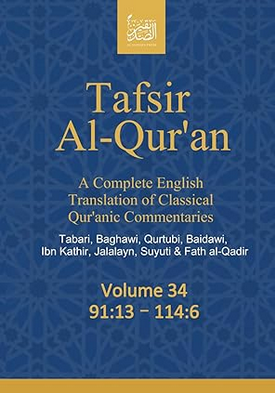
Tafsir Al-Qurʾan
English translation and comparative reading edition
A 34-volume comparative English reading edition of eight classical Qurʾanic commentaries—al-Ṭabarī, al-Baghawī, al-Qurṭubī, al-Bayḍāwī, Ibn Kathīr, al-Jalālayn, al-Suyūṭī, and Fatḥ al-Qadīr—designed for parallel reading, searching, and comparison.
34-volume series · Amazon-linked Vol. 34 ISBN-13: 9798281835794
Papers and talks from the supplied Academia.edu profile are collected
below. The first column is designed for a first-page or article-cover
image, following the document-preview format of the supplied example.
Talks & presentationsThe Scriptural Roots of Modern Political Science: Faith and Citizenship Presentation, Onyx Link Foundation
Onyx Link Foundation, Wales, 2019
An understanding of the scriptural roots of modern political science creates a unified narrative for Christians, Jews, Muslims, and the non-believer. Modern concepts of nation, citizen, coexistence, equality, rights, faith, law and morality are rooted in the Bible and were revived by Christian Hebraists in the 16th - 18th centuries. The rights that we cherish today were actually revived by deeply religious Christians, on deeply religious grounds, and this has its parallel in the Islamic tradition. The state is meant to function in a back seat position, secondary to the family, tribe, community and guild, policing only to preserve the common good and not to impose values. This is the basic assumption of the scriptural roots of modern political scientists as brought down by Christian Hebraists, this is what avoided civil war in the United Kingdom. We ignore this heritage at our peril.
PapersWhat Does It Mean To Believe? In The Context Of Ibn ʿAbbās On “Whoever Seeks a Dīn Other Than Al-Islām, It Will Not Be Accepted From Him” (QurʾĀn 3:85)
Studies in History and Jurisprudence, 2026
This study examines the meaning of īmān in early Qurʾānic exegesis and its implications for the status of Jews who affirm Muḥammad while remaining attached to Torah. Reports attributed to Ibn ʿAbbās and Ibn Masʿūd, together with al-Ṭabarī's own lexical analysis, define īmān fundamentally as taṣdīq-affirming or recognizing truth. Al-Ṭabarī further preserves a category of "believers from among the People of the Book" and defines the required faith of Jews and Christians as taṣdīq of Muḥammad and what he brought. At the same time, Q 5:43-48 preserves distinctions between the one dīn and differing sharāʾiʿ, including Torah rulings applied to Jews during Muḥammad's lifetime. The study argues that taṣdīq, islām, ittibāʿ, and covenantal jurisdiction are related but distinct concepts. Supersession therefore requires a separate juridical argument from naskh; it cannot simply be assumed from the lexical meaning of "belief.
PapersThe Green Servant: Pinchas, Eliyahu, and al-Khiḍr as One Servant of God with Eternal Life
Studies in History and Jurisprudence, 2026
This article advances a deliberately bold reconstruction: the figures known in Jewish tradition as Pinchas and Eliyahu ha-Navi, and in Islamic tradition as al-Khiḍr, are not merely analogous wonder-working guides. This article argues that they may preserve a shared memory of one deathless servant of God, refracted through different names, legal vocabularies, and narrative settings. The argument rests on several interlocking motifs: Pinchas' mixed Aaronide-Midianite genealogy; his appeal to a higher covenantal law in the crisis of Zimri; his reward of the covenant of peace and everlasting priesthood; the midrashic identification of Pinchas with Eliyahu; Eliyahu's post-ascension role as guide, judge, healer, and revealer of hidden justice; and the Qur'anic portrayal of al-Khiḍr as Moses' mysterious teacher at the junction of the two seas. Miriam's Well, the water from the rock, healing waters after Shabbat, the revived fish of the Khiḍr narrative, and the Water of Life traditions form a single symbolic complex. The thesis proposed here is that Pinchas-Eliyahu-al-Khiḍr represents a priest-prophet appointed to reveal a deeper understanding of the law to reconcile zeal with mercy.
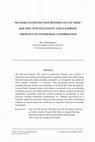
Papers“We Make No Distinction Between Any of Them”: Qur’anic Non-Exclusivity and a Rabbinic Theology of Testimonial Confirmation
Studies in History and Jurisprudence, 2026
The Qur’anic formula “We make no distinction between any of them” is classically read in tafsīr as rejecting selective prophetic belief. This article argues that the formula also rejects religious monopoly: no community may affirm its own prophet, scripture, or covenant while dismissing divine guidance mediated through another true messenger. It develops this claim through a distinction between two forms of belief: dogmatic belief, which binds a community to its own founding revelation and covenantal law, and testimonial belief, which confirms another God-fearing community’s prophetic testimony without entering its jurisdiction. It then proposes Noahide testimonial confirmation as a rabbinic equivalent. Noahism is not a separate religion for non-Jews, but the Torah measure by which God-fearing religions among the nations are confirmed as religiously valid and covenantally meaningful. It is proposed that a Jew or Christian with multi-covenantal/Noahide awareness fully fulfills the Qur’anic requirement without entering Islamic jurisdiction.
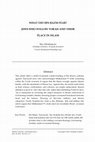
PapersWhat Did Ibn Ḥazm Fear? Jews Who Follow Torah and Their Place in Islam
Studies in History and Jurisprudence, 2026
This article offers a multi-covenantal counter-reading of Ibn Ḥazm’s polemic against ʿĪsawiyyah Jews who acknowledged Muḥammad ﷺ while remaining within the Torah covenant. It argues that Ibn Ḥazm wrongly equates Islamic finality with the annulment of Mosaic law. Against this, the article reads Islam as final witness, confirmation, and criterion, not simple replacement. Special attention is given to ʿĪsā’s Qurʾānic role: rather than abolishing Torah for Jews, ʿĪsā is interpreted as correcting the unjust extension of Mosaic restrictions to God-fearing Gentiles, thereby restoring proper covenantal boundaries between Israel and the nations. Drawing on Qurʾānic, rabbinic, and Islamic categories—Torah, Noahide law, sharīʿa, dīn, dhimma, ʿahd, and mīthāq—the article argues that Muḥammad ﷺ’s truth need not invalidate Moses’ covenant with Israel.
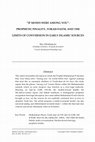
Papers“If Moses Were Among You”: Prophetic Finality, Torah-Faith, and the Limits of Conversion in Early Islamic Sources
Studies in History and Jurisprudence , 2026
This article reconsiders the report in which the Prophet Muḥammad ﷺ declares that, were Moses alive "among you," he would follow him. Against readings that treat this as automatic abolition of Torah-sharīʿah for Jews, the study argues that the phrase "among you" locates Moses within the Muhammadan ummah, where no prior lawgiver may function as a rival legal authority. Drawing on Qurʾān 2:208, 5:43-48, the double-reward ḥadīth, the Muʿādh-to-Yemen report, and Mahdī traditions, it distinguishes prophetic recognition from legal absorption. Jews must affirm Muḥammad ﷺ and what he brought as true, yet the sources do not explicitly command Jews as Jews to abandon Torah law. The article proposes a multi-covenantal model: one dīn, universal taṣdīq, and differentiated revealed sharāʾiʿ within the final Qurʾānic criterion and divine Abrahamic order of revelation.
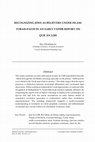
PapersRecognizing Jews as Believers under Islam: Torah-Faith in an Early Tafsīr Report on Qurʾān 2:208
Studies in History and Jurisprudence, 2026
This article examines an early tafsīr report on Qurʾān 2:208 transmitted from Ibn ʿAbbās through Ibn Abī Ḥātim, focusing especially on the phrase: "Sufficient for you is belief in the Torah and what it contains." The study argues that the report preserves a distinction between covenantal affirmation and covenantal legal observance. While continued independent Torah legal practice is restricted after recognition of Muḥammad ,ﷺ Torah-faith itself remains explicitly affirmed. By comparing this report with al-Ṭabarī's theology of taṣdīq in his commentary on Qurʾān 2:41 and 2:62, the article reconstructs an early Islamic model of cumulative revelation grounded in confirmation rather than annihilative supersessionism. The resulting framework suggests a multi-covenantal understanding of revelation in which prophetic continuity and differentiated covenantal laws coexist within one Abrahamic revelatory order.
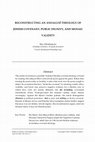
PapersReconstructing an Andalusī Theology of Jewish Covenant, Public Dignity, and Mosaic Validity
Studies in History and Jurisprudence, 2026
This article reconstructs a possible Andalusī Muslim covenant theology of Israel by reading Abū Isḥāq al-Ilbīrī's anti-Jewish poem against the grain. Rather than treating the poem solely as hostility, it asks what rival view the poem sought to defeat. Its accusation that Jews "broke the covenant" by attaining wealth, office, visibility, and honor may preserve negative evidence for a Muslim view in which Jews were not merely dhimmīs, but ahl al-mīthāq: covenantal monotheists whose Torah-governed life retained validity under Islamic sovereignty. Against Ibn Ḥazm's harsher polemic, the article distinguishes dhimma as political protection, ʿahd as pact, and mīthāq as divine covenant. Reports of Ḥaram service and Khaybar jizya-exemption claims further suggest that jizya was not destiny. Jewish dignity, this reconstruction argues, need not threaten Islam; it may test Muslim justice.
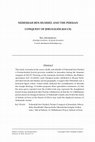
PapersNehemiah ben Hushiel and the Persian Conquest of Jerusalem (614 CE)
Studies in History and Jurisprudence, 2026
This study reconstructs the career, death, and afterlife of Nehemiah ben Hushiel, a Persian-backed Jewish governor installed in Jerusalem during the Sasanian conquest of 614 CE. Drawing on the Armenian chronicle of Sebeos, the Hebrew apocalypse Sefer Zerubbabel, early liturgical poetry attributed to Eleazar Kalir, and later Jewish and Islamic sacred geography, it argues that Nehemiah was a historical figure whose violent death catalyzed the crystallization of Messiah ben Joseph theology. It further proposes three speculative extensions: (1) that the mass grave reported near the Golden Gate may represent the slaughtered Jewish troops abandoned after Persian withdrawal; (2) that the Av HaRaḥaman prayer preserves liturgical memory of Nehemiah's death; and (3) that the shrine of Salman al-Farsi on the Mount of Olives may mark the displaced memory of Nehemiah's burial.
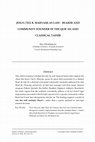
PapersJesus (ʿĪsā b. Maryam) as Law‑Bearer and Community Founder in the Qurʾān and Classical Tafsīr
Studies in History and Jurisprudence, 2026
This article examines whether the Qurʾān and classical Sunni tafsīr support the claim that Jesus (ʿĪsā b. Maryam, peace be upon him) possessed (1) a distinct Sharīʿah and (2) a defined covenantal community (ummah) addressed by that Sharīʿah. Drawing exclusively on Qurʾānic passages and their major classical exegeses (Ṭabarī, Qurtubī, Ibn Kathīr, Bayḍāwī, Baghawī, Jalālayn, Shawkānī), the study argues that the tradition consistently affirms a real but limited legal dispensation associated with the Injīl, operative for a specific community within Banū Isrāʾīl and later abrogated by the Qurʾān. The findings support a model of one dīn with multiple Sharāʾiʿ, rather than a purely spiritual or non-legal mission for Jesus.
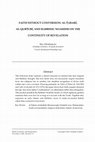
PapersFaith without Conversion: Al-Ṭabarī, Al-Qurṭubī, and Rabbinic Noahism on the Continuity of Revelation
Studies in History and Jurisprudence, 2025
This historical study explores a shared structure in classical Qurʾānic exegesis and Rabbinic thought: that true belief does not necessarily require transition from one religious law to another, but steadfast recognition of divine truth within one's own covenant. Drawing primarily on Tafsīr al-Ṭabarī (d. 310/923) and Tafsīr al-Qurṭubī (d. 671/1272), the paper shows how both exegetes interpret the Qurʾānic term taṣdīq ("confirmation") as affirmation rather than abrogation. This position parallels the Rabbinic Noahide model, in which righteous gentiles maintain their own shariʿah so long as it accords with the Torah. Together they represent an early Islamic and Rabbinic vision of multi-covenantal fidelity rather than exclusivist conversion.
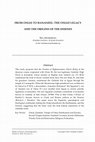
PapersFrom Onias to Hananeel: The Oniad Legacy and the Origins of the Essenes
Studies in History and Jurisprudence, 2025
This study proposes that the Teacher of Righteousness (Moreh Ẓedeq) of the Qumran corpus originated with Onias III, the last legitimate Zadokite High Priest in Jerusalem, whose murder at Daphne near Antioch (ca. 171 BCE) symbolized the exile of divine wisdom from Zion. His son Onias IV, and later his grandson Ananias, maintained the Zadokite line in Egypt through the temple of Leontopolis. When the Hasmonean high priesthood was overthrown by Herod in 37 BCE, a descendant-Ananelus (Hananeel "the Egyptian"), son of Ananias son of Onias IV-was recalled from Egypt to restore priestly legitimacy in Jerusalem. The new Egyptian-Zadokite community in Jerusalem known in Aramaic as Beit Ossaye אוסיאי( )בית or Beit Ossine ("House of Boethus"), became known to Greek and Roman authors as the Essenes (Ἐσσηνοί / Ἐσσαῖοι). This paper traces the linguistic, genealogical, and theological continuities linking the Oniad priesthood, the Boethusians, and the Essenes, suggesting that the latter were the final Judean expression of the Zadokite order.
PapersṬabarī’s Salmān al-Fārisī within the context of the Persian Conquest of Jerusalem (614–617 CE)
Studies in History and Jurisprudence, 2025
This article takes a fresh look at Ṭabarī’s Salmān al-Fārisī narrative: The Mosul–Jerusalem episodes reflect a Persian–Jewish campaign (614–617) rather than a hagiographic seeker’s journey. Motifs—kanīsa, bayʿa, “sixty men,” hunts, and a court feast—read as military assembly, oath, detachment, maneuvers, and politics. A two-column alignment (Ṭabarī vs. reconstruction), philological notes (kenishta/kanīsa, al-madīna), and synchronization with Sebeos, Benjamin of Tiberias, and Kalb support the case. The reading explains anomalies (Mosul rally, unit size, banquet defiance, expulsion threat, Arabian corridor) and yields testable predictions (prosopography, variant recensions, Syriac/Aramaic parallels). It addresses objections (semantics, Sebeos dependence, isnād ecology, parsimony) and reframes early Muslim–Jewish–Sasanian entanglements and apocalyptic vectors toward Arabia.
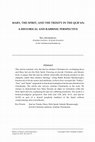
PapersMary, the Spirit, and the Trinity in the Qur'an: A Historical and Rabbinic Perspective
Studies in History and Jurisprudence, 2025
This article examines why the Qur'an rebukes Christians for worshiping Jesus and Mary but not the Holy Spirit. Drawing on Jewish, Christian, and Islamic texts, it argues that the Qur'an reflects observable devotional practices in late antiquity rather than abstract theology. Using Rabbi Eliyahu Benamozegh's framework of divine names and attributes, it shows how concepts like "Father," "Son," and "Spirit" originated as functional metaphors but became literalized in Christianity. The article also surveys Arabian Christianity in the early 7th century to demonstrate how Mary became an object of veneration while the Holy Spirit did not, explaining the Qur'an's differing treatment. The result is a historical-religious perspective that links Joel 2:28, John 16:13, and Qur'an 16:102 as part of a shared prophetic tradition of the Spirit without compromising strict monotheism.
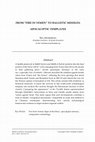
PapersFrom “Fire in Yemen” to Ballistic Missiles: Apocalyptic Templates
Studies in History and Jurisprudence, 2025
A ḥadīth preserved in Ṣaḥīḥ Muslim and Ṣaḥīḥ al-Bukhārī predicts that the final portent of the Hour will be "a fire emerging from Yemen that drives the people to their gathering place." Jewish apocalyptic literature of the same era-especially Sefer Zerubbabel-likewise describes the rebellion against hostile rulers from Yemen and "the Syrian," reflecting the twin uprisings that shook Sasanian-ruled Yemen and Byzantine Syria in 608 CE and cleared the way for the Persian capture of Jerusalem in 614. This article rereads both traditions as historical memories. It traces the survival of this south-north eschatological template into modern Shiʿi activist thought: the Khomeinist doctrine of tahdīr al-ẓuhūr ("preparing the appearance" of the Twelfth Imām) operationalised through Hizbollah's intervention in Syria and Houthi missile attacks from Yemen against Israel. This study argues that such developments constitute a form of Islamic 'evangelical messianism,' comparable in scope and method to its Christian counterpart, demonstrating how ancient eschatological frameworks continue to shape modern regional conflict.
PapersA Response on the Boundaries of Noahide Religious Expression
Studies in History and Jurisprudence, 2025
This paper offers a critical response to an essay which argues that Noahides are prohibited from innovating religious practices, creating ceremonies, or adopting additional commandments. While affirming the Torah’s insistence on halakhic precision and the prohibition against unauthorized religious innovation within the covenant of Israel, this paper distinguishes between covenantal boundaries for Jews and those for Noahides. Drawing on Maimonides’ Mishneh Torah, the Talmudic discussions in Sanhedrin 59a, Avodah Zarah 64b, and Menachot 109b, and the philosophical writings of Rabbi Eliyahu Benamozegh, the paper argues that non-Jews are not only permitted—but expected—to develop their own covenants through religious expressions, provided these do not attempt to replace or disinherit the covenant of Israel. By introducing the concept of religious federalism, it proposes that diversity among mainstream religions can coexist within Torah universalism, as long as ethical monotheism and covenantal integrity are maintained.
PapersSūrat Al-Fātiḥah, Āmīn, and Taslīm: A Liturgical Response to Sectarian Exclusivity
Studies in History and Jurisprudence, 2025
This article examines how three elements of Islamic ritual prayer-Sūrat al-Fātiḥah, the communal affirmation Āmīn, and the concluding greeting Taslīm-function as a theological response to exclusivity in sectarian Jewish liturgy. Drawing on Tafsīr al-Qurṭubī and early Islamic Hadith, the study explores traditions stating that Jews envied Muslims for their use of Āmīn and salām. While Amen and shalom were central features of Rabbinic Judaism, the article argues that the Jewish groups encountered by the Qur'an and Prophet Muhammad ﷺ were not Rabbinic, but rather Sadducean or Zadokite in nature-priestly sects whose Temple-based liturgy excluded communal affirmation and emphasized hierarchical silence. By restoring Āmīn as a participatory affirmation and closing the prayer with salām, Islam reclaims the universal ethos of prophetic worship and corrects sectarian patterns of exclusion. Comparative analysis with Rabbinic responses-such as the development of Oseh Shalom and adaptations to the Amidah-highlights parallel moves toward theological inclusion that had been lost in the Roman era.
PapersPriests, not Rabbis: Reconsidering the Sectarian Identity of the Jews of Yathrib
Studies in History and Jurisprudence, 2025
This article revisits the dominant view that the Jewish communities of pre-Islamic Yathrib (Medina) adhered to rabbinic Judaism. While Haggai Mazuz has argued that Jewish practice in Yathrib reflects halakhic norms consistent with rabbinic tradition, this article draws upon Islamic historiography, tafsīr, and ḥadīth to argue otherwise. Evidence such as literalist application of lex talionis, rejection of Āmīn, veneration of the Kaʿbah, and extreme purity practices points instead to a Sadducean, Oniad, or sectarian priestly origin-suggesting that rabbinic Judaism was not the sole or even dominant form of Jewish practice in Arabia on the eve of Islam.
PapersEchoes of Pluralism: Competing Conceptions of Salvation in Early Islamic Exegesis
Studies in History and Jurisprudence, 2025
This article proposes that early Islamic theology preserved multiple conceptions of salvation, including a form of theological pluralism that recognized the post-prophetic validity of previous Abrahamic dispensations under certain conditions. Through a close reading of Tafsīr al-Ṭabarī and Tafsīr al-Qurṭubī, particularly on verses such as Q 2:62, Q 3:85, and Q 5:43, this study argues that such pluralist views-rooted in scriptural and prophetic precedent-remained viable in the formative centuries of Islam. Over time, however, later theological consolidation and exclusivist kalām frameworks effectively overlaid and marginalized these interpretations. While traces remain in classical tafsīr literature, they are often misread or ignored due to dominant post-classical assumptions about abrogation and religious supersession.
PapersIslam is the Most Pluralistic of all Religions
Papers
This document emerged while I was translating a book on Lost Christianity for a professor of Aqeeda and Comparative Religion in Saudi Arabia. His perspective, rooted in traditional Islamic thought, was that Christianity initially functioned as the next stage of Judaism (Messianic Judaism) but was lost early on, becoming completely corrupted. According to the classical Islamic paradigm, Christianity remained a proper faith only for about one generation—except for a small, persecuted minority—while Paul was largely responsible for its theological divergence and corruption.
This led me to wonder: What if we shifted the paradigm slightly? What if Rabbi Eliyahu Benamozegh’s approach to Jewish-Christian relations were applied to Muslim-Christian relations?
I wrote this text from the perspective of the book’s author, presenting an alternative paradigm for his research. It follows a question-and-answer format and is framed in the language of his research, not in the language that one would expect from an orthodox Jew, albeit it is consistent with Rabbi Benamozegh’s orthodox school of thought. Several Islamic scholars who reviewed it thought the discussion was thought provoking and beneficial, so I now present it for further comment and discussion.
PapersSigns of the Hour & The Messiah
Studies in History and Jurisprudence, 2025
This paper explores the intersection of religious and social crises in the contemporary world, emphasizing the conflicts between science and religion, among religions, and within religions themselves. The paper discusses how the breakdown of trust in societal institutions creates a vacuum that gives rise to a new form of religion based on technological advancements and media influence, being symptomatic of a deeper rebellion against the Creator. After a survey of traditional Rabbinic eschatology, it compares various traditions, including the roles of the Mahdi, Messiah, Armilus and the Dajjal, suggesting that these diverse narratives are representations of the same eschatological events seen from different perspectives. It discusses how propaganda and misinformation, especially in the digital age, have become what might be termed “the mindset of the Dajjal”. The paper concludes with a reflection on the hadith about the rise of "harj"—a time of deceit and internal conflict—and how the believers with the best intentions may find themselves becoming armies of the Dajjal.
PapersWhoever says the Prophets sinned is simply mistaken
Studies in History and Jurisprudence, 2018
This paper discusses the question posed by the Rabbis of the Talmud concerning whether the prophets sinned. A similar question is posed in the Islamic tradition, in which was found that prophets don't sin. Ibn Hazm, one of the first and most vocal proponents of the corruption of Hebrew scriptures, declared the Torah invalid because it taught the prophets sinned. However this reflects an lack of familiarity with the Hebrew scriptures and Rabbinic tradition. These verses were interpreted by the Talmudic sages, long before Ibn Hazm, not as referring to sins, but as temporary weaknesses or even as perfectly correct actions given the context of the situation.
PapersYosef Dhu Nuwas: A Sadducean King with Sidelocks
Studies in History and Jurisprudence, 2011
This paper traces the history and fortunes of the Hellenizing Jewish family of the Tobiads from their Persian roots, to their founding of a petty kingdom at 'Iraq al-Amir, to the Nabataean wars, to the Tubba kings of Himyar. It explores 3rd to 6th century Arabia as an extension of the Second Commonwealth, and a direct descendant of the Tobiad petty kingdom. It also covers the loss of a replica of the Ark of the Covenant adorned even today with the Tobiad/Himyar dove, now buried under a church in Axum, Ethiopia; and discusses the linguistic derivations of Saracen, mushreqoon and "Dhu Nuwas".
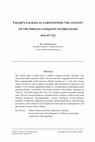
PapersThe Persian Conquest of Jerusalem in 614CE compared with the Islamic Conquest of 638 CE: Its Messianic Nature and the Role of the Jewish Exilarch
Studies in History and Jurisprudence, 2004
Explores the conquests of Jerusalem in 614CE and 638CE within the context of previous attempts at Jewish restoration. Discusses reasons for a Persian-Jewish alliance and later a Judeo-Arab alliance. In an attempt to reconcile contemporary sources, an account is given of Babylonian Jewish Exilarch Nechemiah ben Hushiel, his brother Shallum (Salman Farsi) and nephew Yakov (Ka'b Al-Ahbar) who played pivotal roles in these conquests. Proposes that the twelve men who went to Mecca to meet with the Prophet were Jewish refugees from Edessa, by way of Medina. Suggesting that the authors of Sefer Zerubavel and of the Prayer of Shimon bar Yochai were Jews from Medina.
PapersThe Intended Sacrifice: Ishmael (pbuh) or Isaac (pbuh) ─ A Study In Combined Report
Studies in History and Jurisprudence, 2015
The question of whether Ishmael or Isaac were the intended sacrifice of Abraham has sparked dogmatic debate for centuries between Islam and other faiths. It has also been the subject of debate within Islam itself. This article does not focus on who was the intended sacrifice, but rather why there was any debate within Islam. The number of differing ahadith concerning the intended sacrifice is strikingly unusual. We suggest that there were two parallel pre-Islamic traditions that formed an integrated whole: both sons underwent a trial, and that both sons have divinely appointed roles. The technique of combined report is used to show how this is validated by both Islamic and Jewish scriptures. That authentic tradition can be understood to give mutual validation certainly has implications regarding coexistence today.
PapersReconstructing the Islamic Jewish Calendar
Studies in History and Jurisprudence, 2020
The author traces the roots of the Islamic Calendar to the Jewish calendar.Beginning in 325 CE, the Sanhedrin’s role as keeper of the calendar wasdisrupted, its role abolished in 358 CE, and office of Nasi (Patriarch) eliminated in 425 CE. This role was then taken over by Qussay ibn Kilab’s House of Assembly (the Dar al-Nadwah). Using etymological, historiographical and mathematical methods, the author shows that Qussay’s calendar incorporated all the aspects of the Jewish calendar, and introduced two innovations: 1)occasionally deleting Elul for the purpose of keeping Tishrei aligned with the Fall Equinox and 2) exchanging the “sacred” aspect of the four Jewish pilgrimage months to other months. The latter made possible because three ofthe pilgrimages had been forbidden by Rome. Ashura’s connection with YomKippur is explained, and the evolution of the Islamic “leap day” algorithm explored.
PapersMulticovenantism in Judaism and Islam
Studies in History and Jurisprudence, 2020
"Multicovenantism" is the concept that there are different covenants (brith, sha'aria) for different peoples, united by basic universal ethics. In Jewish parlance, these universal ethics are referred to as the Noahide covenant, in Islam, these ethics are referred to as deen, which means basic law. Both Judaism and Islam have strong intellectual frameworks for accepting other religions, provided these religions conform to the basic set of universal ethics. Acceptance and tolerance is found in scripture and in traditional commentary. Familiarity with these sources will empower both the non-believer and the faithful, enabling a culture of tolerance among societies rooted in Abrahamic religions to flourish again.
PapersThe Jews of the Qur'an
Studies in History and Jurisprudence, 2020
The Jews of the Qur'an belonged to varied and mutually exclusive groups. Some Jews joined Muhammad, some opposed him. The majority of Jewish tribes encountered by Muhammad held a Sadducean-based form of Judaism, as opposed to the Rabbinic sect, which was a minority in that area. This may help explain the seemingly contradictory attitude that the Qur'an holds vis a vis the Jews. Contextualizing said verses provides a framework which can eschew ongoing conflict.
PapersThe Islamic Jewish Calendar: How the Pilgrimage of the 9th of Av became the Hajj of the 9th of Dhu'al-Hijjah
Studies in History and Jurisprudence , 2007
The Islamic or Hijra calendar is made up of 12 lunar months. Traces of Jewish holidays like Rosh Hashanah, Yom Kippur, Pesach (Passover) and Shavout (Pentacost) are still evident in this calendar. This can be understood by tracing the history of the Jewish Calendar. It is proposed that when the Sanhedrin was disbanded and a mathematical calendar proposed by Hillel son of R. Yehuda in 358 CE, this was the catalyst for three calendars to develop: 1) The modern Jewish Calender, 2) The pre-Islamic Lunar-Solar Calendar, and 3) a strictly Lunar Calendar that became the modern Islamic Calendar.
(Updated by 2020 paper "Reconstructing the Islamic Jewish Calendar" by same author)